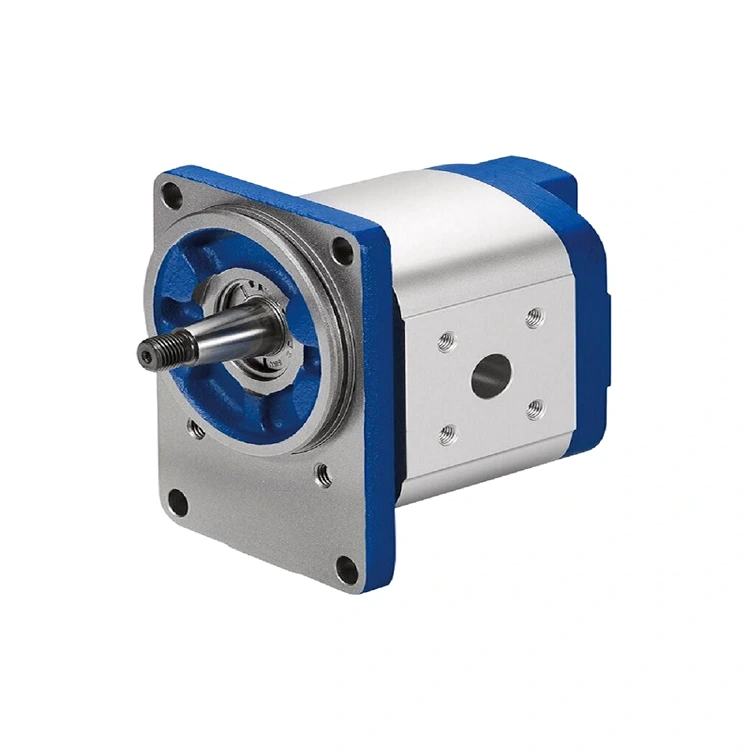
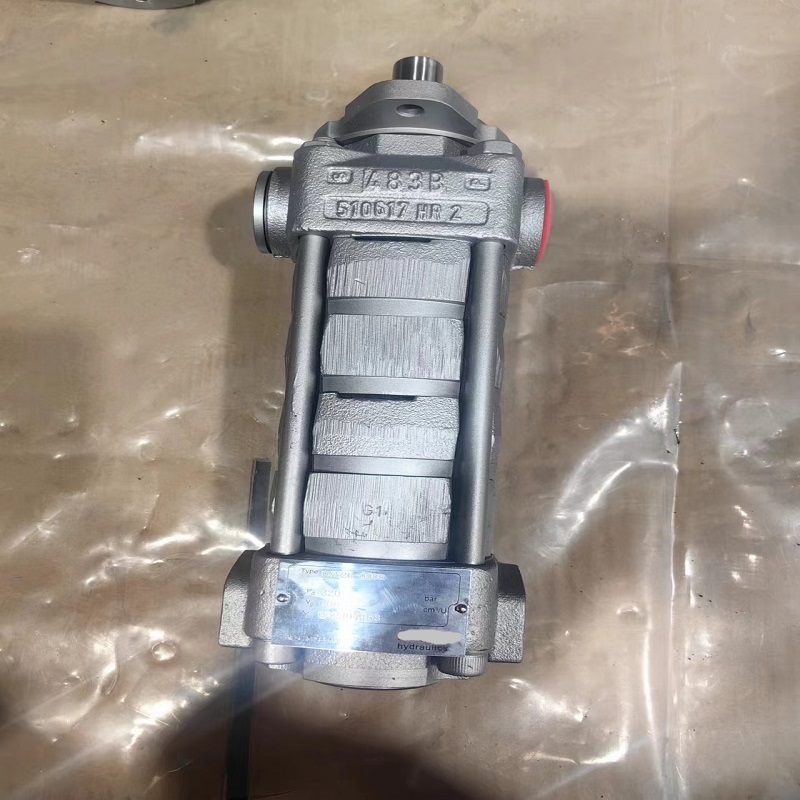
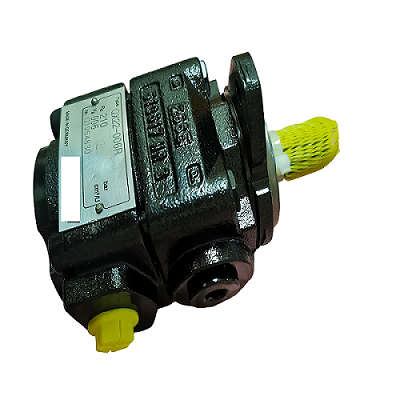
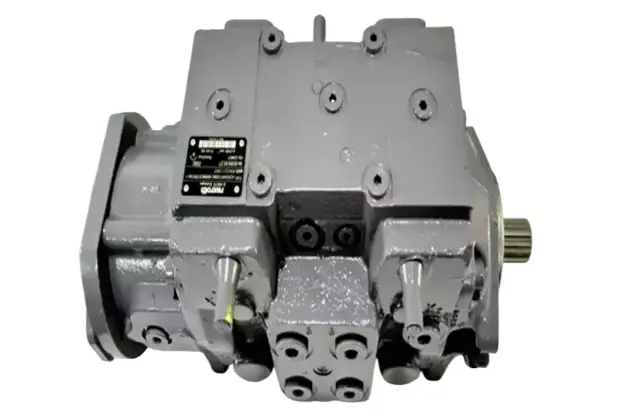
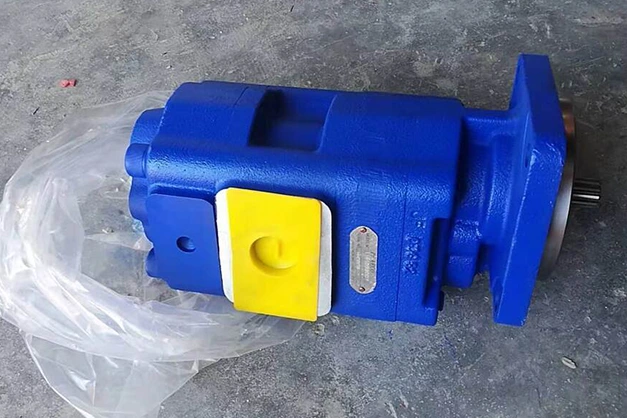
Blade pumps are a popular category of positive displacement pumps, known for their compact size, smooth flow, and ability to handle low-viscosity fluids. They operate using a series of vanes (sliding blades) mounted on a rotor that spins inside a cammed cavity. As the rotor turns, the vanes slide in and out, trapping fluid between the blades and the housing, then forcing it out through the discharge port.
While blade pumps can be classified in several ways (e.g., by design or application), the two most fundamental and widely recognized types are unbalanced blade pumps and balanced vane pumps. This distinction is based on the shape of the cam ring and the resulting hydraulic pressure distribution within the pump.
Below is a detailed breakdown of each type.
1. Unbalanced Blade Pump
An unbalanced blade pump features a circular cam ring that is positioned eccentrically (off-center) relative to the rotor. Because the rotor and cam ring are not concentric, the volume between successive vanes changes as the rotor turns: it increases on the intake side (creating suction) and decreases on the discharge side (creating pressure).
Key Characteristics:
Pressure loading: The rotor and vanes experience net hydraulic force in one direction. This "unbalanced" radial load bends the shaft and wears bearings faster, making the pump suitable only for lower-pressure applications (typically up to 1,500–2,000 psi).
Flow pulsation: Slightly higher flow ripple compared to balanced designs.
Simplicity: Fewer parts and a simpler cam ring shape make it easier and cheaper to manufacture.
Variable displacement possible: By shifting the cam ring relative to the rotor, the pump can become a variable-displacement pump (common in hydraulic systems where flow needs to adjust to load).
A balanced blade pump uses an elliptical or oval-shaped cam ring that is concentric with the rotor. The ring has two intake arcs and two discharge arcs, arranged symmetrically. As the rotor completes one full revolution, each vane pair goes through two increasing-volume zones (intake) and two decreasing-volume zones (discharge).
Key Characteristics:
Balanced pressure: Because the hydraulic forces act on two opposite sides simultaneously, the net radial load on the rotor and shaft is nearly zero. This allows much higher operating pressures (up to 3,000–4,000 psi or more) and longer bearing life.
Smoother flow: The two discharge strokes per revolution reduce pulsation significantly.
Fixed displacement only: The concentric cam ring cannot be moved, so balanced vane pumps are always fixed-displacement pumps.
Quieter operation: The symmetrical loading and reduced pulsation make them quieter than unbalanced designs.
Common applications:
High-pressure hydraulic systems (e.g., injection molding machines, presses)
Power steering systems
Aircraft hydraulic pumps (where reliability and smoothness are critical)
We use cookies to offer you a better browsing experience, analyze site traffic and personalize content. By using this site, you agree to our use of cookies.Privacy Policy